Water as Structure, Not Service
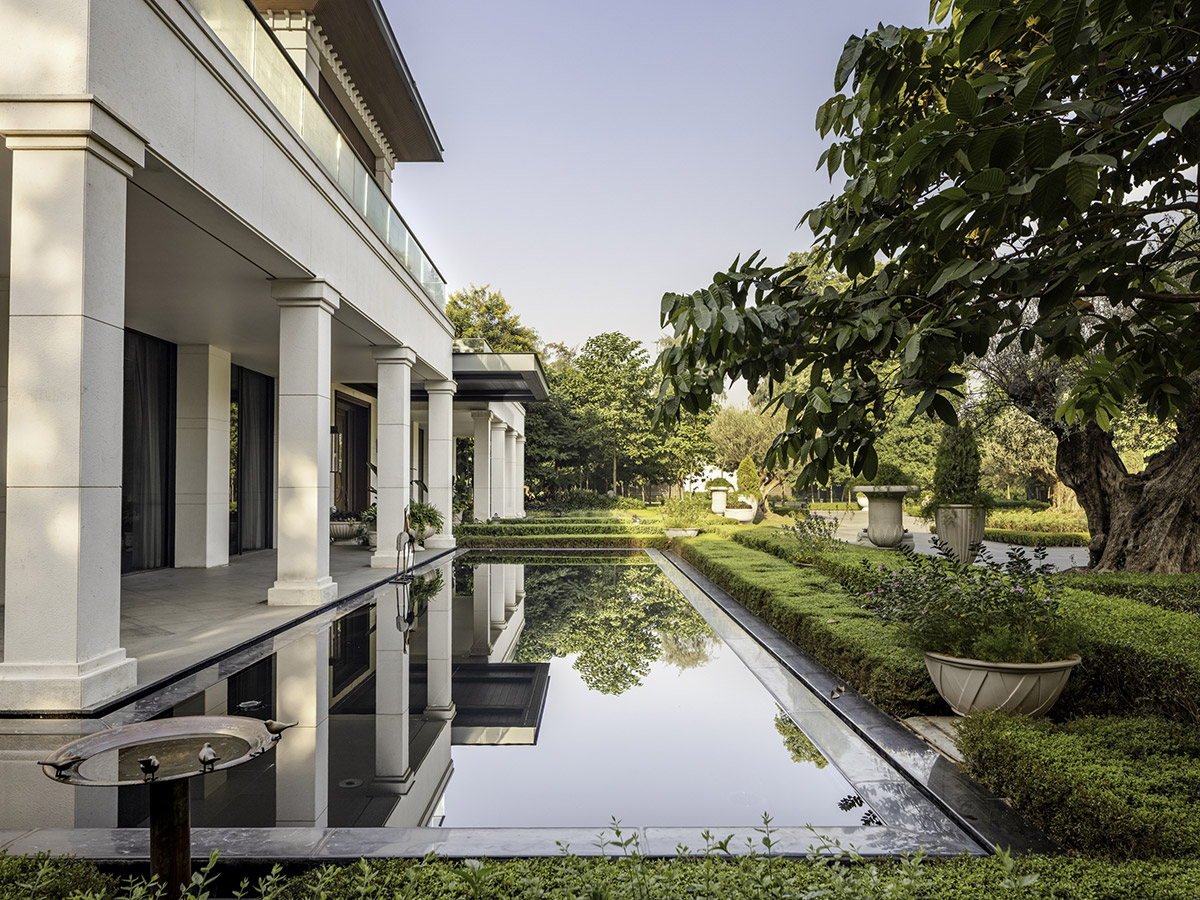
There is a fundamental error in how we begin most projects today.
We start with the built — with blocks, footprints, alignments — and then we try to “fit” water into what remains. Drains are added. Harvesting systems are introduced. Landscapes are designed to conceal the excess.
But water does not work like that. It does not adjust to architecture. Architecture must adjust to it.
Land carries memory. Long before a wall is drawn, the site already knows where water moves, where it collects, where it resists. Ignoring this intelligence is not just an environmental oversight — it is a planning failure.
In estate-scale developments, this becomes even more critical. Larger sites amplify both intelligence and error. A misplaced level, an over-hardened surface, an interrupted natural flow — these are not small mistakes. They compound over time, affecting microclimate, soil health, and long-term usability.
Water-sensitive planning is often misunderstood as a layer of sustainability. It is not a layer. It is a starting point.
When water leads, the architecture shifts.
Contours are preserved rather than erased.
Permeability becomes a design decision, not a technical correction.
Landscape is no longer cosmetic — it becomes performative.
Built form aligns itself to flow, rather than resisting it.
This creates environments that are inherently more stable. Cooler. Quieter. More resilient.
There is also a deeper cultural disconnect we must acknowledge. Traditional Indian settlements — stepwells, temple tanks, agrarian layouts — were all deeply water-aware. They did not separate land, water, and built form into silos. They worked as one system.
In contrast, much of contemporary development operates in fragments.
To return to water as a primary driver is not regression. It is progress — a more informed, more disciplined way of building.
Because the future of architecture will not be defined by what we add.
It will be defined by what we understand first.
And water is where that understanding begins.