Upgrading the workplace
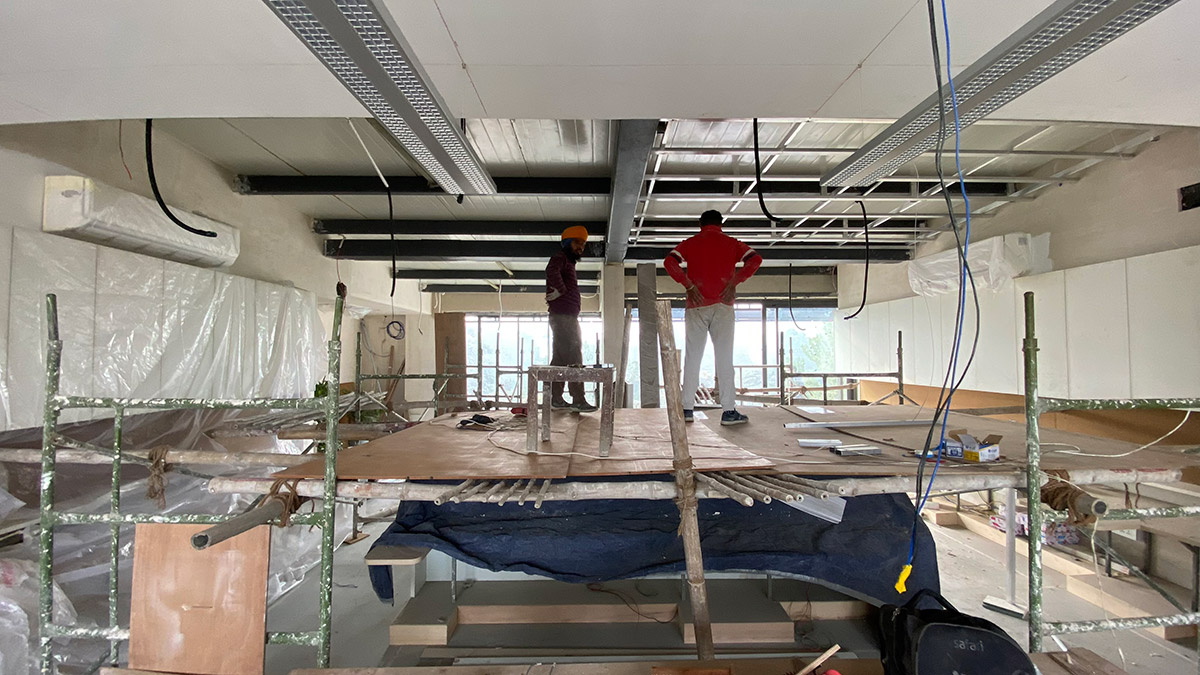
Architecture is often discussed in terms of beginnings—a new site, a fresh brief, a blank sheet. But some of the most meaningful design work happens somewhere in between where a space already carries memory, habit and history. Renovating and upgrading our offices in Ludhiana and Delhi this year was exactly that kind of exercise. Not a reinvention, but a recalibration.
Running a practice for decades teaches you that a workplace is a living system. It ages. It adapts.
It resists change at first—and then, if done right, it begins to support you in ways you hadn’t anticipated. The decision to upgrade both offices came from a simple realisation: the way we work has evolved faster than the spaces we were working in. Teams had grown, workflows had changed, with Sahir & Sarah joining in technology had embedded itself deeper into every stage of design, and collaboration had become more fluid and less hierarchical. The spaces needed to catch up.
The process itself was equal parts excitement and chaos for both Monika and me. Anyone who has renovated an active workplace knows this rhythm well. Mad but invigorating, drawings pinned next to packing boxes. Site meetings happening alongside design reviews. Temporary desks, borrowed chairs, cables everywhere. There is a strange energy in that in-between state—a reminder that architecture is not just about finished images, but about transitions. About holding things together while they are in flux.
What mattered to us was clarity. Both offices were reimagined around the idea of flow—of people, of information, of decision-making. So many times pen was put to paper, multiple re calibrations , endless discussions as we stripped back where we needed to and added where it made sense. Walls were reconsidered not as boundaries, but as filters. Transparency increased, not as a stylistic gesture, but as a way of encouraging conversation and shared ownership of work. Teams that once operated in silos could now see each other, hear each other, and collaborate more instinctively.
Efficiency, for us, is never about speed alone. It is about reducing friction. In Ludhiana, spatial adjacencies were rethought to support smoother coordination between design, detailing and execution teams. In Delhi, the focus was on creating flexible zones—spaces that could shift from focused individual work to collective discussion without ceremony. Meeting rooms became less formal and more usable. Workstations were designed to feel calm rather than compressed. Storage was integrated thoughtfully, so that the studio could breathe.
Light played a critical role in both spaces. Natural light was maximised wherever possible, and artificial lighting was softened and layered to reduce fatigue. Materials were kept honest and restrained—surfaces that age well, that don’t shout for attention, that allow the work itself to take centre stage. A workplace, after all, should support thinking, not distract from it.
There was also an emotional layer to this transition. Offices are repositories of stories—late nights before deadlines, quiet moments of doubt, bursts of collective excitement when a concept clicks. Upgrading a space means acknowledging those memories while making room for new ones. It means respecting what has worked and having the courage to let go of what no longer serves the present.
What made this process truly rewarding was how the teams responded. Amid the disruption, there was patience, adaptability, and a shared sense of ownership. Everyone understood that the temporary discomfort was part of a longer arc. That architecture, even when it is your own, demands trust in the process.
Looking back, these upgrades were less about aesthetics and more about intent. About aligning our physical environment with the way we think, design, and collaborate today. A workplace should quietly reinforce values—clarity over clutter, proportion over excess, focus over noise. When it does that well, it becomes invisible in the best possible way. You stop noticing the space and start noticing the quality of work it enables.
As architects, we often design spaces for others to grow into. This year reminded me of the importance of doing the same for ourselves. Of treating the workplace not as a static backdrop, but as an evolving partner in the creative process. If architecture is, at its core, about shaping environments that support human potential, then it must begin at home—within the studios where ideas are born, tested, and refined every single day.