Architecture and the Next Intelligence Layer in Design
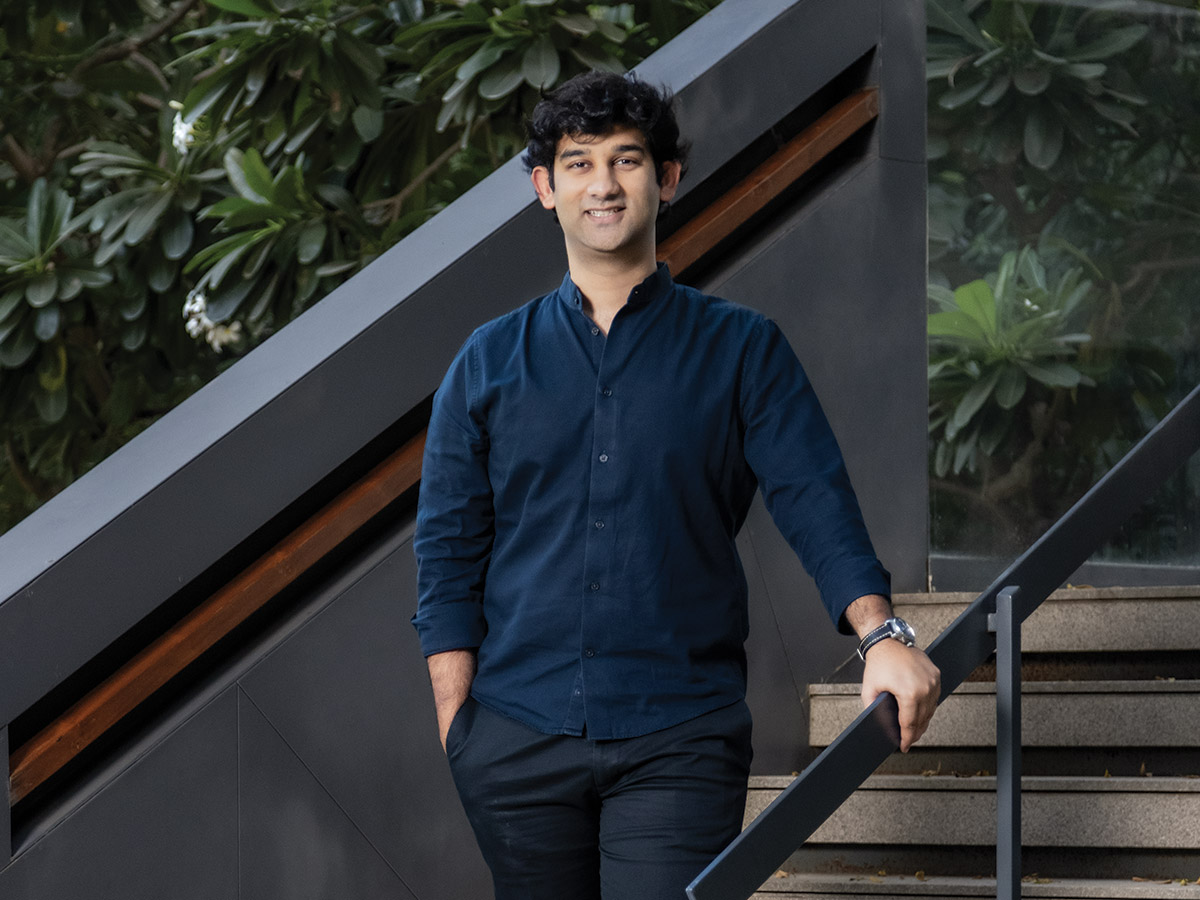
For Sahir Choudhary, artificial intelligence is not a disruption to architecture. It is a new lens.
A faster lens. A sharper one. One capable of scanning, comparing, mapping and iterating at a speed architecture studios could not have imagined a decade ago. But still, only a lens.
Architecture, for him, remains rooted in something more difficult to automate: judgement, proportion, context, climate, memory, material behaviour and the quiet intelligence of how people live.
At Habitat Architects, where Sahir works as Senior Architect, COO and Design Technology Lead, AI is not treated as a shortcut for producing attractive imagery. It is being understood as part of a larger computational design layer within the studio — one that can support research, pattern recognition, option-testing, environmental thinking, workflow acceleration and sharper design communication.
For Sahir, the question is no longer whether architecture studios should use AI. The real question is whether they understand how to use it with responsibility, depth and architectural intelligence.
That distinction matters.
In an image-heavy design culture, AI can easily become a machine for producing atmosphere without understanding. It can generate a convincing facade, a cinematic interior or a hyperreal building that never had to face gravity, cost, climate, codes, construction logic, craft or daily life.
For Sahir, that is not where the real potential lies.
The deeper opportunity is in using AI to help architects think at a higher resolution.
How does a multigenerational family move through a house without losing privacy? How does a research campus allow collaboration without compromising control? How does a retail street hold attention without becoming chaotic? How does a resort create pause, discovery and memory? How does a mixed-use development balance density, movement, identity and long-term value?
These remain architectural questions. AI simply allows the studio to interrogate them faster, from more angles and with sharper comparative intelligence.
At Habitat Architects, this thinking sits across several layers of practice.
At the intelligence layer, AI-assisted systems help study project typologies, planning precedents, material innovation, hospitality behaviour, urban patterns, emerging technologies and global architecture references.
At the visual layer, generative systems are used for early-stage mood exploration, atmosphere, facade direction, light studies, spatial temperament and conceptual testing. These outputs are treated as probes, not as final design.
At the computational layer, the studio continues to work with Rhino, Grasshopper, BIM coordination, parametric modelling, environmental analysis and advanced visualisation engines. The next shift lies in connecting AI more intelligently with these systems — using it to organise complexity, accelerate iteration and make design intelligence more structured.
Sahir is also interested in internal knowledge systems and retrieval-based workflows that can make a studio’s own archive more alive. Details, materials, planning studies, site learnings, project histories and design decisions should not sit passively in folders. They can become searchable, connected and useful again.
This is where AI begins to move from tool to infrastructure.
For an Indian architecture studio, the implications are especially powerful. Projects in India rarely exist within a single layer. A home may carry three generations, ritual, staff infrastructure, climate, privacy, security and hospitality within one plan. A commercial project may need to function as retail, public realm, urban marker and social experience at once. A research campus may have to hold regulation, collaboration, landscape, technical control and institutional identity in a single system.
Complexity is not an exception in India. It is the condition.
That is why the strongest use of AI in Indian architecture is not to imitate global imagery. It is to strengthen local intelligence.
Climate. Craft. Density. Family structures. Ritual. Material behaviour. Service systems. Informal movement. The relationship between privacy and gathering. The way people actually inhabit space.
AI becomes meaningful only when it helps architects read these realities with more precision.
It cannot replace authorship. It cannot replace spatial judgement. It cannot resolve the ethical responsibility of building. It cannot understand a client’s unspoken anxieties, the weight of a site, the temperament of light in a courtyard or the cultural memory embedded in a material.
But it can help architects arrive at better questions. And in design, better questions often lead to better buildings.
For Sahir, the future of AI in architecture is not about replacing architects. It is about creating architects who can think at a higher resolution.
Architects who can move between intuition and computation. Between parametric systems and lived experience. Between environmental intelligence and emotional intelligence. Between the world as data and the world as felt reality.
That is the world he loves — not a world where machines design for us, but one where technology helps sharpen the human act of designing.
ABOUT SAHIR CHOUDHARY
Sahir Choudhary is Senior Architect, COO and Design Technology Lead at Habitat Architects, one of India’s multidisciplinary architecture and design studios. A graduate of Cornell University, Sahir works across computational design, AI-assisted workflows, parametric systems, urban logic, environmental intelligence and advanced visualisation.
At Habitat Architects, his work explores how AI, simulation, parametric design and systems thinking can strengthen architectural judgement across mixed-use developments, research campuses, hospitality environments, high-density commercial projects, retail architecture and multigenerational homes.
Representing a new generation of Indian architects, Sahir uses technology not as spectacle, but as infrastructure for sharper design thinking, more rigorous spatial decision-making and architecture that responds intelligently to climate, culture, behaviour and context.