Palate by Design: The Baccarat Collab, through my lens – where light, craft, and flavour became one experience
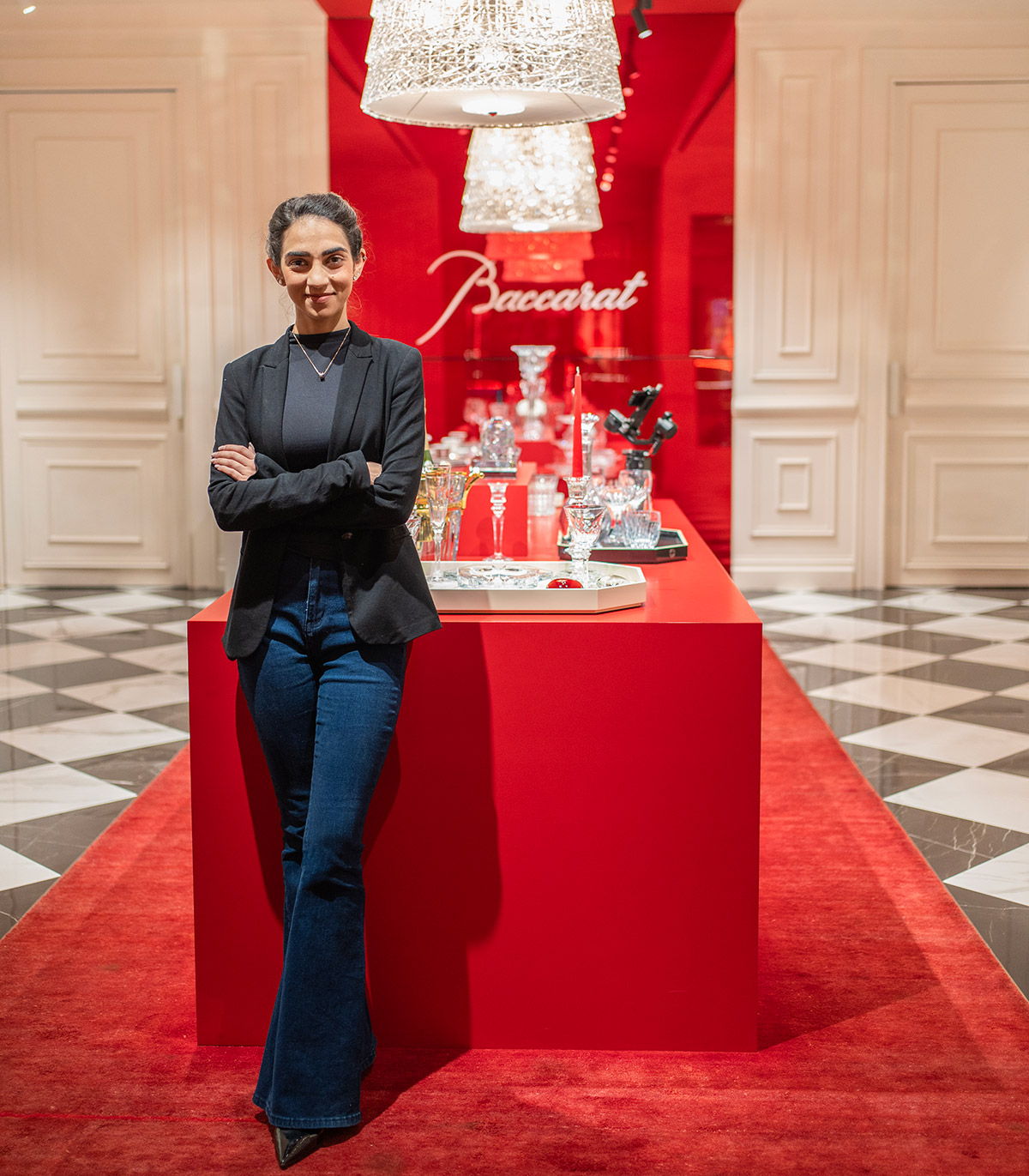
Some collaborations don’t begin with a brief. They begin with a feeling.
With Baccarat, the starting point wasn’t “table styling” or “event décor.” It was a quieter question: What does a guest remember after the last course is cleared? The glow. The rhythm. The way a room holds you. The way a glass catches light like a small ceremony.
For me, this was never about setting a table beautifully. It was about composing an experience—where the precision of French crystal could meet the warmth of Indian hosting, and where every element—food, sound, texture, and light—felt deliberate, not decorative. Craft as atmosphere, not ornament.
Baccarat is iconic because it is uncompromising. The cut is exacting. The weight is intentional. The brilliance isn’t loud—it’s disciplined.
That discipline is what I relate to most. In interiors, I’m always looking for a kind of luxury that doesn’t rely on excess. The kind that comes from proportion, clarity, and restraint. Baccarat carries that same sensibility: the object is beautiful, but what it truly creates is atmosphere.
In this collaboration, the crystal wasn’t an accessory. It was a material presence. It shaped the mood in the room—how light moved, how the table read from a distance, how intimate the setting felt once you sat down.
One of the most meaningful parts of this project was the conversation with the chef.
Instead of treating food as something that arrives “into” a design, we designed with the courses—pace, temperature, colour, plating scale, and the emotional arc of the meal. We discussed what the first bite should feel like, how the middle courses build richness, and how the end should soften, not abruptly stop.
Those conversations shaped everything:
- the lighting temperature and intensity
- how reflective surfaces were positioned
- where sparkle was introduced and where it was deliberately held back
- the spacing between settings to control intimacy
- and the cadence of the table composition so it didn’t compete with the food
The result wasn’t a styled table. It was a choreography.
The meeting point: French crystal, Indian hospitality
I often think the most memorable luxury is not visual—it’s relational. It’s how people feel in a space. In India, hospitality is emotional. It’s generous. It’s layered. It’s never just “service.”
Baccarat, on the other hand, represents a kind of heritage discipline—an object refined over centuries. This collaboration became interesting precisely because these worlds are different: one is cultural warmth, the other is craft precision.
So the design approach became about balance:
- letting the crystal speak without making the room shout
- allowing sparkle to appear like punctuation, not wallpaper
- using material contrast (soft vs sharp, matte vs gleam) to keep the table alive
- keeping the palette composed so the food remained the hero
As much as this was about crystal, it was ultimately about light.
Crystal only becomes itself when light meets it. That became our real design medium: not “colour themes,” but the behaviour of light—how it refracts, how it breaks, how it softens. We treated lighting almost like music: intensity rises and falls, highlights appear and disappear, reflections move as people move.
The goal was not a perfect photograph. The goal was a living room—one that changes as the evening unfolds.
There was a moment mid-way through the dinner where the room settled. Conversations softened into that comfortable hum. The table stopped being an object and became a landscape. The crystal began to feel less like “product” and more like ritual—a language of celebration.
That’s the moment I design for.
Not the moment a guest says “this looks stunning,” but when they forget to say it—because they’re simply inside it.
It reaffirmed something I deeply believe in: good design doesn’t decorate an experience. It builds it.
When craft is respected, when light is treated as architecture, and when food is approached as a design discipline—an evening becomes more than an event. It becomes a memory with shape.
Baccarat brought heritage and precision. We brought narrative and context. Together, we created something I love most: a moment that felt timeless, not trend-led.
And if someone left remembering only one thing, I hope it was this—
that luxury is not the cost of an object, but the care with which a moment is composed.