From Habitat Architects to ZHCollective | A Practice, Continued
In 1994, there were three of us — Zafar and Ranjodh, two college friends, and Monika, Zafar’s girlfriend — and a considerable amount of youthful certainty about what architecture and design could do.
We were young enough to be idealistic about it.
We believed good architecture mattered enormously.
That proportion mattered. That a drawing could alter the experience of a place. That materials had consequence.
That details mattered even when nobody consciously noticed them.
That the way a building met the ground, received light, opened to climate or held people together could change the quality of everyday life.
We also knew much less than we thought we did.
Perhaps that was useful.
There was no grand plan to build a multidisciplinary practice. We were trying to make good design, better architecture, to understand what each project was asking of us, and to earn the opportunity to do the next piece of work a little better.
We called the practice Habitat Architects.
It was a hopeful name.
Habitat suggested something larger than the building itself. It carried ideas of people, place, environment and inhabitation — architecture understood not as an isolated object, but as the setting within which life happens.
We could not have known then how closely that word would follow the questions we would spend the next three decades asking.
Three people, one practice —and many more passionate people joining along the way
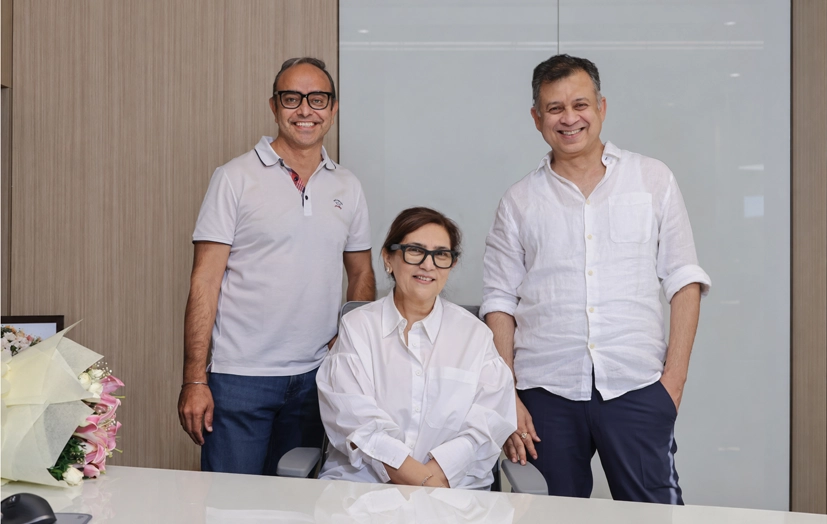
The early practice was shaped as much by our differences as by what we shared.
The three of us did not always arrive at the same answer in the same way.
There were arguments over plans, elevations, proportions, materials and sometimes things that would have appeared insignificant to anyone outside the room.
But those conversations mattered.
Looking back, we realise that some of the culture of the practice was established in those early disagreements — the expectation that an idea had to withstand questioning, that instinct was valuable but not sufficient, and that a drawing could always be looked at once more.
We learnt to trust each other’s strengths.
Zafar’s relentless pursuit of architectural excellence sharpened the practice.
Monika’s instinct was to keep asking what the architecture was saying — about the people it was for, the culture it came from and the life it would eventually hold.
Ranjodh brought another mind to that early conversation, and the differences between the three of us made the work more considered.
Somewhere between that pursuit of excellence, that search for meaning and the constant questioning between us, our own language of design began to form.
We also learnt that architecture became better when no one voice was allowed to become too certain of itself.
In those years, there was very little distance between an idea and the consequences of that idea.
Architecture happened between drawing boards and sites; through tracing paper, measurements, models, material samples, contractors, craftsmen, clients and endless corrections.
You drew something.
Someone built it.
And very quickly, the building told you whether you had been right.
Some of our most enduring education happened that way.
We learned that a line that looks insignificant on paper can determine how an entire space feels.
That a beautiful material badly detailed is no longer beautiful.
That climate eventually exposes architectural pretence.
That craftsmen often understand something the drawing has failed to communicate.
That clients sometimes ask the question the architect has forgotten to ask.
And that buildings have an inconvenient but useful habit of revealing the truth.
Slowly, we began to understand that architecture was not primarily about having ideas.
It was about developing judgment.
A practice accumulates
Architecture is an unusual profession because knowledge in practice does not simply advance.
It accumulates.
One building leaves something behind in the next.
- A house teaches you about privacy and togetherness.
- A workplace teaches you about behaviour and movement.
- A hotel teaches you that architecture cannot be separated from operations, service and experience.
- A large development changes the way you understand infrastructure and sequence.
- A masterplan reminds you that individual buildings are fragments of a much larger social and urban condition.
- An interior brings architecture back to the distance of the hand — to texture, light, touch, furniture, thresholds and the intimate rituals of occupation.
Over time, knowledge begins to travel between disciplines.
That is how Habitat Architects grew.
Homes led to other homes. Buildings became larger and more complex. Architecture and interiors became increasingly inseparable. Hospitality brought another understanding of experience. Individual sites expanded into masterplans and urban propositions.
India changed around us too.
- Cities expanded.
- Aspirations changed.
- Clients travelled more.
- New materials and construction systems became available.
- Technology altered first how architecture was drawn, then how it was coordinated, visualised, communicated and ultimately conceived.
The questions became larger.
And so did the practice.
But growth, in itself, has never been particularly interesting to us.
What interests us is what practice teaches you over time.
The more architecture one makes, the less convincing easy answers become.
Architecture as judgment
If there is one position that has become clearer to us over time, it is this:
Architecture is an act of judgment, not style.
Every project arrives with its own conditions.
- Climate. Context. Culture. Programme. Proportion. Client ambition. Material. Construction. Economics. Human behaviour. Time.
Architecture begins in deciding what matters among them.
- What should remain.
- What should change.
- What deserves emphasis.
- What should recede.
- Where intervention is necessary.
- And sometimes, when not to intervene at all.
We have never been particularly interested in making every Habitat project recognisable as a Habitat project.
We would rather a building belong convincingly to its place.
If there is continuity across the work, we hope it lies in the discipline of the decisions rather than in a repeated appearance.
- In proportion.
- In the relationship between inside and outside.
- In the way light enters a room.
- In material selected with some understanding of how it will age.
- In the calibration between openness and privacy.
- In details that may go unnoticed but change how a place is experienced.
- And in the belief that architecture should still make sense when the photograph is no longer new.
Time changes a practice
Three decades is long enough for a practice to become something its founders could not have completely anticipated.
That, we think, is a good thing.
Some people who began the journey with you take different paths. New people arrive. Responsibilities shift. Projects introduce different scales of thinking. Younger architects challenge inherited assumptions. Technologies change. Clients ask new questions.
And the architecture changes because the conditions around architecture change.
Yet certain things endure.
- The rigour with which work is questioned.
- The refusal to allow scale to make design anonymous.
- The belief that details carry intention.
- The understanding that architecture is ultimately made for occupation rather than observation.
- And the idea, present from the beginning, that no serious practice is ever truly the work of a single individual.
That idea has become even more important to us with time.
And then the conversation changed again…
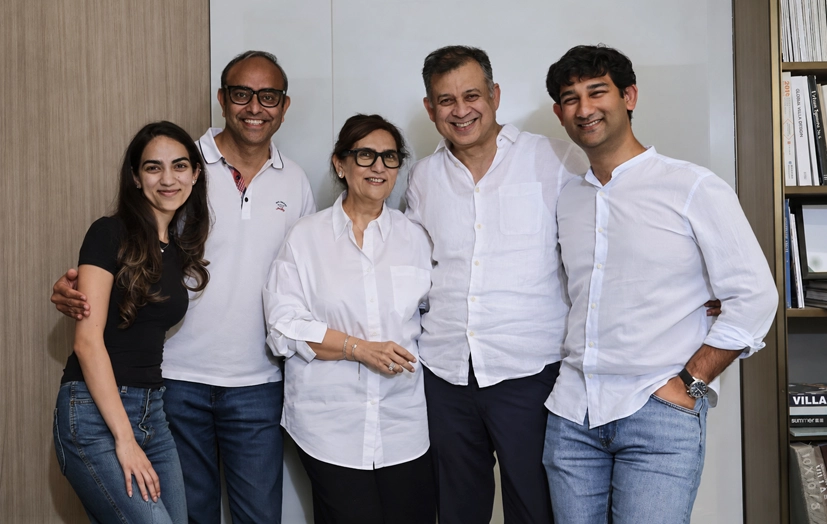
For many years, architecture was simply part of the environment in which Sahir and Sarah grew up.
They knew the rhythms of practice before they knew its vocabulary.
Drawings appeared at home.
Sites entered weekend conversations.
Buildings were discussed over meals.
Travel had an inconvenient tendency to become architectural reconnaissance.
They saw the satisfaction of making things.
They also saw the arguments, the uncertainty, the deadlines and the responsibility that comes with putting something permanent into the world.
We never wanted architecture to become an inheritance they were obliged to accept.
They had to leave, learn, encounter other ways of thinking and decide whether this was a life they genuinely wanted for themselves.
They did.
More importantly, they returned with their own positions.
Sahir — architecture at another scale
Sahir studied architecture at Cornell University.
That education strengthened an interest in architecture beyond the singular object — in complex programmes, urban systems, larger patterns of development and the technologies changing how architecture is conceived and delivered.
He returned with an instinct to interrogate systems.
How do individual buildings participate in a larger urban condition?
How can increasingly complex programmes remain architecturally legible?
How do design, technology, coordination and information work together without allowing process to overwhelm intention?
And how can emerging tools expand architectural intelligence rather than simply accelerate production?
His perspective has gradually extended conversations within the practice around complex architecture, mixed-use environments, masterplanning, urban systems and new modes of design intelligence.
There is curiosity in the way he approaches these questions, but also a healthy unwillingness to accept a process simply because it is the way things have historically been done.
That challenges the practice.
It should.
Sarah — architecture from the inside outward
Sarah began with fashion, but eventually found her way to architecture, drawn instinctively towards the closer scale of experience.
Detail.
Material.
Atmosphere.
The way a surface meets another surface.
The relationship between an object and the room around it.
The difference between a space that is visually resolved and one that actually feels right to inhabit.
After her architectural education, that love of detail led her to specialise further in interiors at the New York School of Interior Design (NYSID).
Her time in New York, including professional experience with Yabu Pushelberg, developed another interest more deeply — hospitality.
Hospitality demands a particular kind of design intelligence.
A space must do more than look considered.
It has to anticipate movement, service, comfort, intimacy, memory and emotion.
It must operate beautifully as well as appear beautiful.
It must understand the guest without becoming theatrical about it.
Sarah brought that sensitivity back into the practice — a way of reading architecture from the inside outward.
Where the larger architectural gesture is tested at the scale of the human body.
Where the weight of a door, the placement of a chair, the transition between materials, the quality of light or the distance between a bed and a window can become as consequential as the elevation outside.
Sahir and Sarah did not return to reproduce the practice they had left.
That was never the intention.
Their education elsewhere mattered.
Their exposure to different cities, institutions, cultures and professional environments mattered.
And their decision to return mattered.
Because they brought back questions we might not have asked ourselves.
They do not always agree with us.
We consider this a good sign.
There are moments when thirty years of experience can see around a corner.
There are others when thirty years of experience becomes precisely the thing that needs to be questioned.
Somewhere between the two sits the possibility of a practice that can evolve without losing itself.
Continuity in architecture should never mean repetition.
It should mean knowing what is worth carrying forward — and having enough confidence in it to allow the next generation to challenge everything else.
More than four people
But even four names cannot explain a practice that has existed for more than three decades.
Around us is a much larger body of architects, designers, technical leaders, project leaders, craftsmen, consultants and specialists.
Some have spent significant parts of their professional lives with Habitat Architects. They have carried projects through difficult sites, resolved drawings when the obvious answer did not work, built long relationships with clients and consultants, understood materials through repeated experience rather than specification sheets, and managed the slow translation between design intention and construction reality.
They hold knowledge that cannot easily be documented because it has been accumulated through making.
Others have arrived more recently, bringing different disciplines, technologies, references and ways of seeing.
Over time, we have come to understand that the intelligence of a practice does not reside in any one person.
There is an African idea, Ubuntu, often understood through the thought “I am because we are.” We have always found something deeply resonant in that.
Not as a philosophy we claim as our own, but as a recognition of something architecture teaches you repeatedly:
what any one of us is able to make is inseparable from the knowledge, challenge, craft and commitment of others.
- The architect who sees something wrong in a drawing before it reaches site.
- The project leader who protects an idea through months of coordination.
- The designer who refuses an almost-right detail.
- The technical mind that makes an ambitious idea buildable.
- The craftsman whose understanding of material changes the detail.
- The person on site who notices what everyone else has missed.
- The conversation that quietly changes the direction of a project.
These are also acts of architecture.
Architecture may carry authorship, but it is realised collectively.
Buildings contain many acts of intelligence — some visible, most not.
A practice of this duration is therefore never the work of its founders alone.
Perhaps we understand that more clearly today than we did when we began.
And perhaps that is another reason the word Collective feels so natural to us now.
Why ZHCollective
And so we arrive at the name.
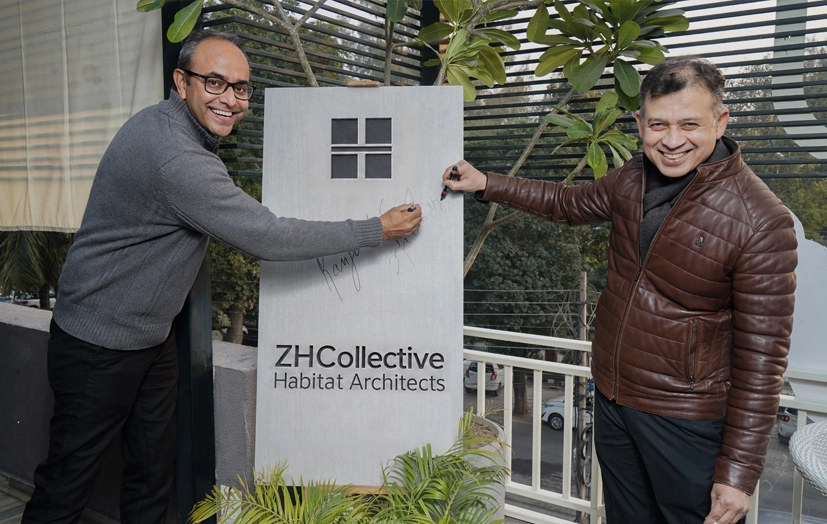
ZHCollective | Habitat Architects.
It would be easy to call this a rebranding.
It isn’t.
It is simply a more truthful expression of the practice we have become.
Architecture remains the foundation. Around it, interiors, hospitality, masterplanning, material intelligence, technology and research increasingly inform one another. Different generations and different disciplines now sit within the same conversation.
ZHCollective gives that conversation a name.
Habitat Architects remains where it began — at the foundation of the practice.
Not something we are leaving behind.
Something we are carrying forward.
What a name carries
There is something deeply personal about a name you have carried for more than three decades.
Habitat Architects has travelled with us through almost our entire adult lives.
- Through the earliest commissions when every project felt disproportionately important.
- Through offices that became too small.
- Through drawings covered in corrections.
- Through clients who trusted us before there was a body of work to prove that trust.
- And through buildings that taught us as much as we ever brought to them.
When we look back, we rarely remember projects first through their published photographs.
We remember a drawing altered until something suddenly became clear.
- A client conversation that changed an entire plan.
- A tree we refused to remove and the architecture that became better because of it.
- A craftsman’s suggestion that was better than ours.
- A difficult site visit that resolved what no drawing could.
- Material revisited years later and made more beautiful by time.
- Families growing into homes that had once existed only as lines on our tables.
That is what more than three decades of practice looks like from the inside.
Not a straight line of completed work.
An accumulation of decisions, mistakes, discoveries, relationships and convictions.
Those experiences are Habitat Architects.
We carry them with us.
A practice, continued
Perhaps the greatest difference between 1994 and today is that we are less certain.
And we value that.
Experience has not made architecture simpler. It has made us more aware of its complexity.
We began Habitat Architects as three young people with drawings, arguments, ideals and perhaps more certainty than experience justified.
We could not have designed the practice that exists today.
We are glad we didn’t try.
A practice, like a building, has to accommodate change without losing its underlying order.
It has to hold memory without becoming captive to nostalgia.
And it has to make room for what comes next.
That is how we see ZHCollective.
In 1994, the three of us began Habitat Architects with an idea of the kind of architecture we wanted to make.
Today, the questions are wider, the conversation is larger, and many more voices sit around the table.
But some things remain remarkably unchanged.
- The belief that architecture has consequence.
- That judgment matters.
- That detail matters.
- That places should belong to their context and to the lives that will unfold within them.
- And that a good practice must remain curious enough to keep questioning itself.
There is nostalgia in looking back.
Of course there is.
But there is also something deeply energising about recognising that the practice is still unfinished.
ZHCollective is our way of making room for what Habitat Architects has become — and for what it may yet become.
Rooted enough to know what we believe.
Open enough to keep asking questions.
ZHCollective | Habitat Architects
Established 1994.
Where Vision Meets Detail.
— Monika Choudhary & Zafar Choudhary
Founding Partners
ZHCollective | Habitat Architects