What Recognition Returns You To On leadership, gratitude, continuity and the long work of building a practice
There is a strange thing about receiving an award of after many years of working.
You would imagine it makes you look at what you have achieved.
For me, it did almost the opposite.
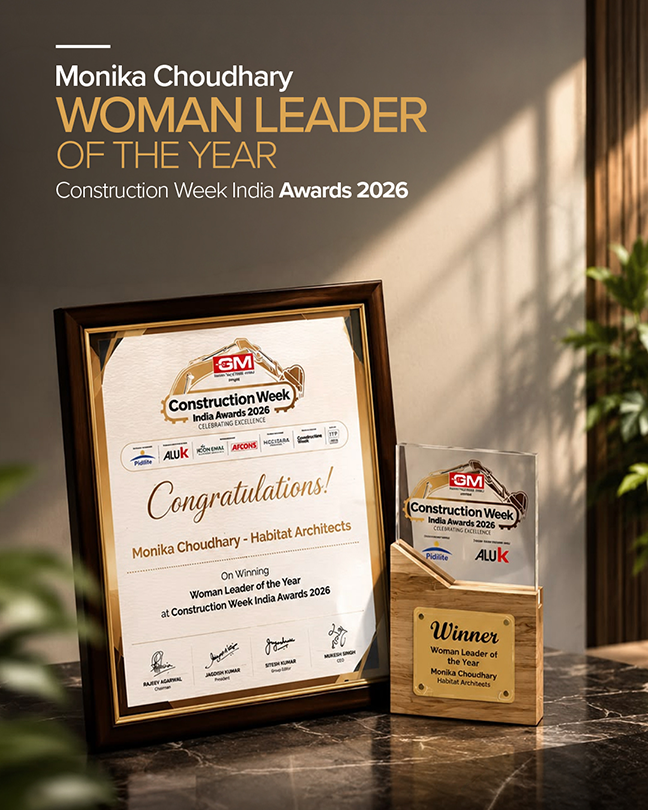
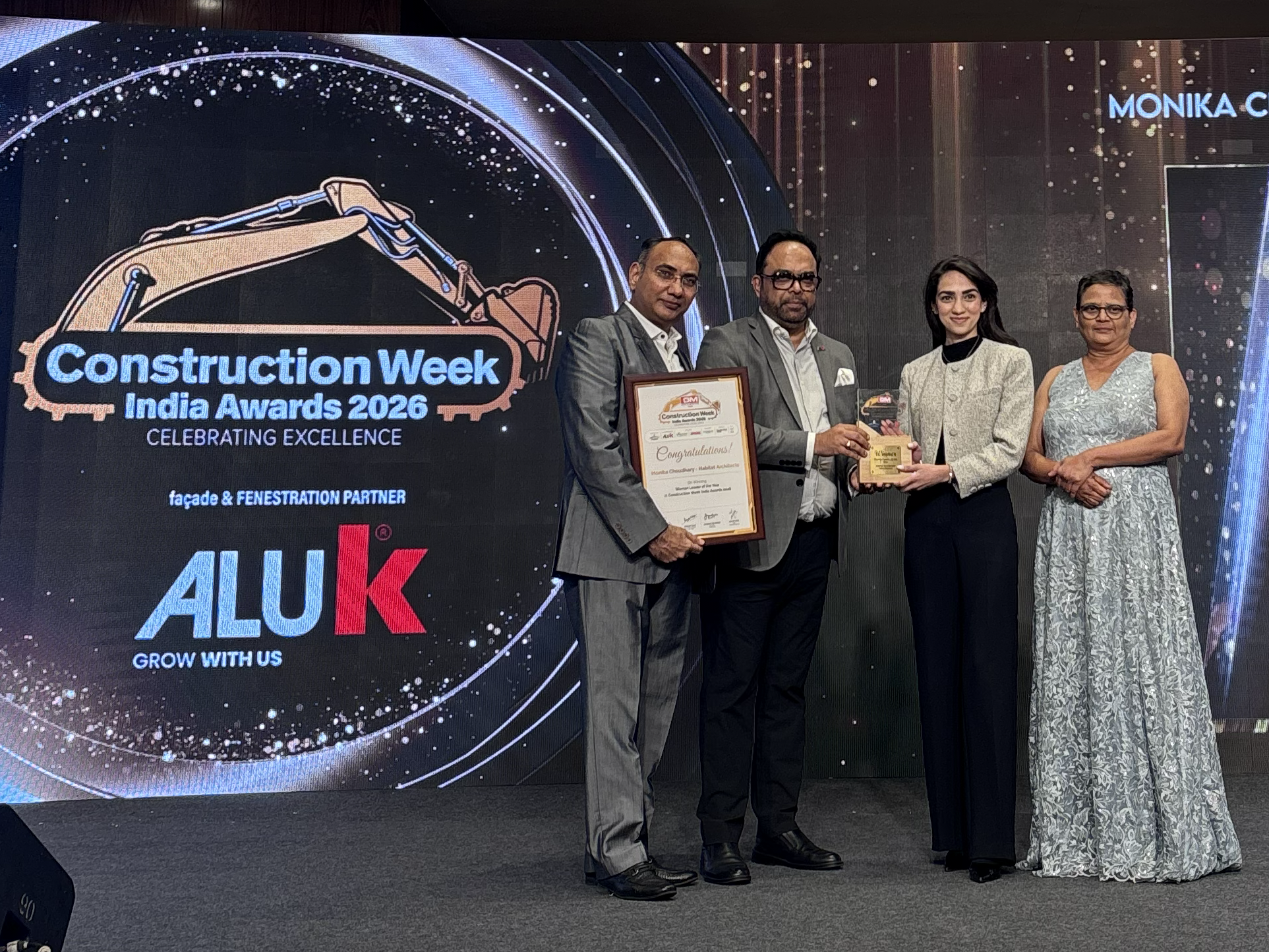
When I heard that I had received the WOMAN LEADER OF THE YEAR at Construction Week India Awards 2026, I found myself thinking less about a particular moment of recognition and more about the long road that makes such a moment possible.
I could not be there that evening. Sarah received the award on my behalf, with my photograph on the screen behind her.
There was something about that image that stayed with me.
Perhaps because leadership, after a certain point, stops being about being present in every room yourself. It begins to be about what continues when you are not in the room.
That is a very different understanding of success.
When we began our practice more than three decades ago, architecture itself was a different profession in India. The conversations were different. Clients were different. Access to information was different. Technology certainly was.
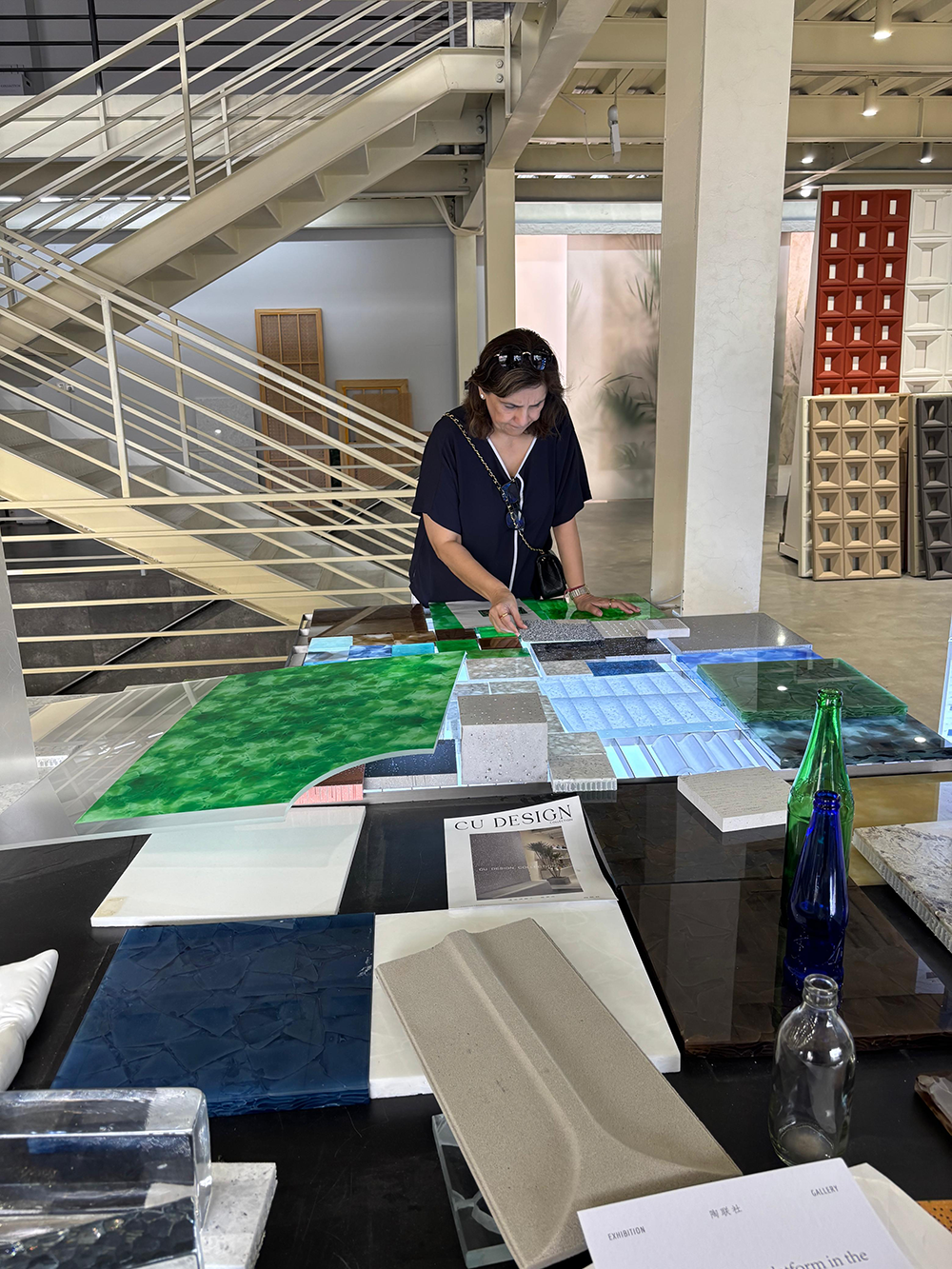
You learnt by observing carefully, travelling when you could, touching materials, understanding how things were made, listening to craftsmen, clients, contractors and other designers, making mistakes and slowly developing judgment.
Some of the most important lessons were not architectural at all. They were about people.
About knowing when to speak and when to listen. About recognising talent before someone necessarily recognises it in themselves. About holding a point of view without becoming rigid. About building trust with a client. About understanding that a good idea is only the beginning; somebody still has to make it work.
And perhaps most importantly, about accepting that a practice cannot grow if every decision has to remain centred around one person.
I have learnt that leadership is not a position from which you control more.
It is a position from which you become responsible for more.
For the quality of the work, certainly. But also for the culture in which that work is produced.
For how people behave when things go wrong.
For whether young architects feel they can question an idea.
For whether commercial pressures quietly begin to weaken design standards.
For whether the next generation inherits a formula or inherits the confidence to think for itself.
These are not things that appear in photographs of completed buildings. But over time, they become the architecture of the practice itself.
That has become increasingly important to me.
Architecture today is moving extraordinarily quickly. We are designing in a world shaped by new technologies, artificial intelligence, climate realities, changing patterns of work, new expectations of hospitality and wellness, and clients whose references are instantly global.
Change is unavoidable.
But longevity is not built by responding to every new thing.
It comes from developing the judgment to know what deserves to change and what must be protected.
I think this is where experience becomes useful.
Not because experience gives you all the answers. In fact, if anything, the longer I work, the more aware I become of how quickly yesterday’s certainty can become today’s limitation.
Experience becomes useful when it helps you ask better questions.
What does this project really need?
What belongs here?
What are we adding simply because we can?
What will still matter ten years from now?
Are we designing for an image, or are we designing for a life?
These questions have followed me through architecture, interiors, hospitality, homes and the development of our own practice.
They have also changed the way I understand ambition.
When you are younger, ambition is often attached to scale: a larger project, a larger platform, a larger opportunity.
Over time, ambition becomes more nuanced.
You begin to care about depth.
Can the work become better without becoming louder?
Can a practice grow without becoming impersonal?
Can several generations work together without one simply imitating the other?
Can you build an institution with enough memory to know where it comes from and enough curiosity to keep moving?
Those questions interest me far more today than size alone.
And perhaps that is why recognition feels different now too.
I receive it with gratitude, of course. To be recognised by peers and by an industry in which one has spent such a large part of one’s life is deeply meaningful.
But gratitude, for me, is not a performance of modesty.
It is an acknowledgement of how many people stand behind any individual recognition.
A practice is built through thousands of conversations, drawings, disagreements, revisions, site visits, late nights, wrong turns, recovered ideas and moments when somebody saw something another person had missed.
It is built through colleagues who stay.
Clients who trust.
Collaborators who challenge you.
And families who quietly learn to live alongside the intensity of building something over decades.
So when an award arrives with one person’s name on it, you know perfectly well that the story behind it is much larger.
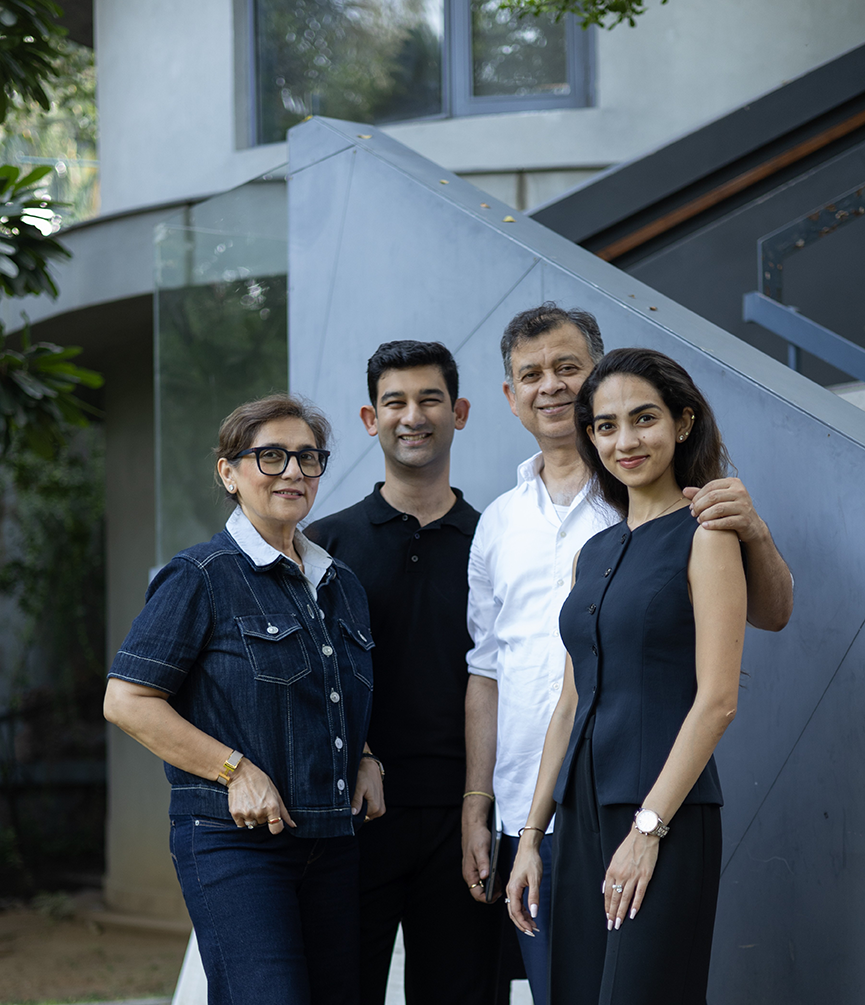
Today, building ZHCollective | Habitat Architects with Zafar, Sahir, Sarah and our team, I find myself thinking increasingly about what we leave behind beyond individual buildings.
Not legacy in the grand sense of the word.
Something more useful.
A way of thinking.
A standard of judgment.
An ability to question.
A respect for context.
The confidence to evolve.
And a culture strong enough that the practice can continue producing meaningful work without depending upon any one personality to sustain it.
Perhaps this is what leadership ultimately becomes.
Not the ability to make yourself indispensable.
The ability to build something that becomes larger than you.
Receiving this recognition from Construction Week India has made me pause long enough to recognise that journey.
And then, quite quickly, to return to the questions ahead.
Because there is still so much to learn.
And still so much to build.