Architecture Beyond Volatility
There is a tendency, especially in uncertain times, to make architecture more responsive — more expressive, more immediate, more aligned to the moment. It feels instinctive. If the world is shifting, shouldn’t our spaces acknowledge it?
I’ve come to believe the opposite.
The more unstable the external environment becomes, the more still architecture must be. Not passive, not indifferent — but grounded. There is a quiet discipline required in resisting the urge to react.
Volatility is not new. It simply becomes more visible at certain points in time. Economies fluctuate, geopolitical lines blur, narratives accelerate. But the role of architecture has never been to keep pace with this movement. It has been to create a counterpoint to it.
A building must hold.
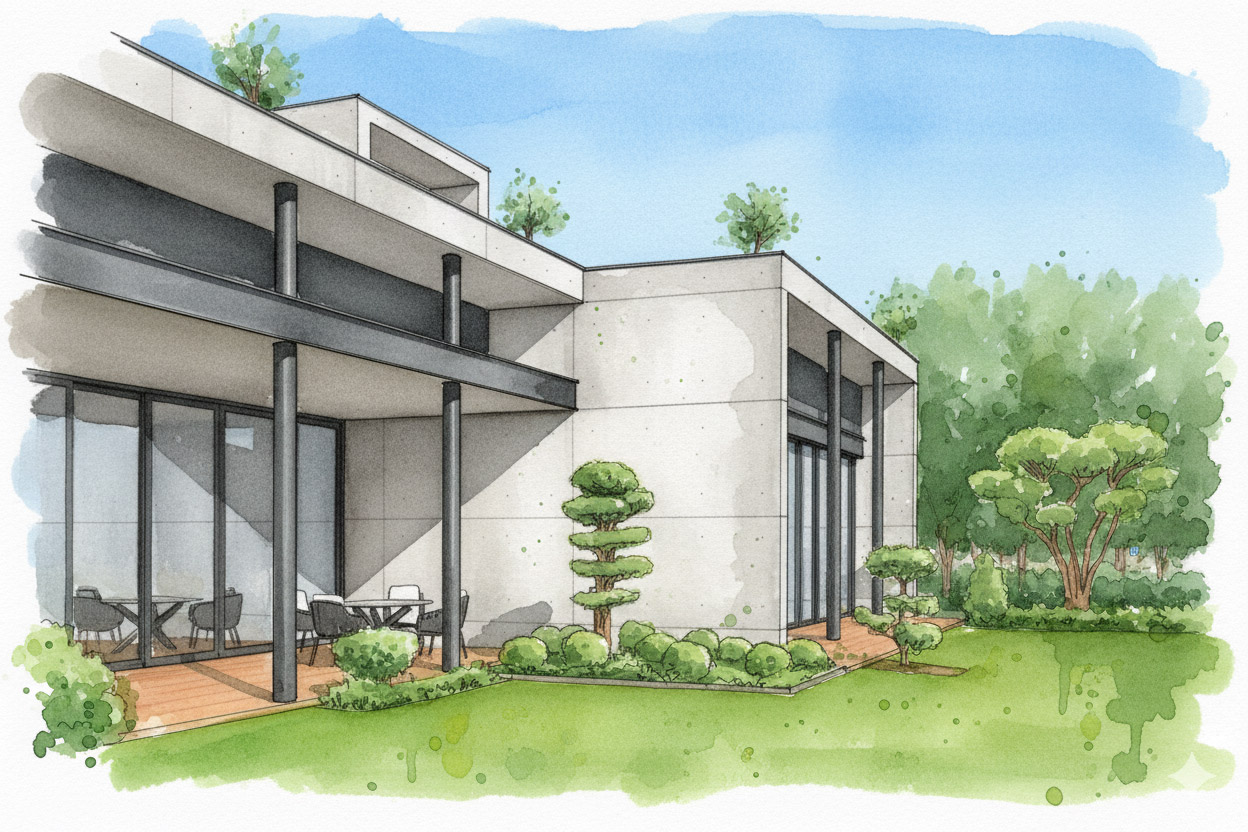
Not just physically — that is assumed — but emotionally, spatially. It must carry a certain steadiness that allows life inside it to continue without interruption. This is not achieved through expression. It is achieved through restraint.
Through proportion that feels resolved, not imposed.
Through orientation that understands light before form.
Through materials chosen for how they age, not how they appear on day one.
These are not romantic ideas. They are technical decisions. Quiet ones. The kind that are rarely visible, but always felt.
In practice, this means designing spaces that do not need to be constantly revisited, corrected, or updated to remain relevant. It means resisting the pull of moment-driven aesthetics, however compelling they may seem.
Because architecture is not consumed in the present tense. It is lived over time.
And time has a way of exposing what was built with intent, and what was built in response.
When everything around us is in motion, the value of what stays still becomes clearer.
Architecture, at its best, does not echo uncertainty.
It absorbs it — and allows life to move forward, uninterrupted.